Kyoto in late autumn is a sensory masterclass in mindful beauty, where centuries of Zen philosophy, classical architecture, and botanical artistry converge in breathtaking harmony. While popular landmarks like Kinkaku-ji and the Arashiyama bamboo grove draw immense crowds, the true contemplative spirit of the ancient imperial capital resides in the lesser-known Zen sub-temples nestled along the eastern hills of Higashiyama and the quiet northern reaches of Kitayama.
Step across the cedar threshold of Gio-ji or Daitoku-ji early on an autumn morning, and the urban hum of modern Japan dissolves instantly into acoustic stillness. Before you unfolds a velvet sea of deep emerald moss, delicately strewn with star-shaped scarlet maple leaves that have drifted down from the canopy above. Ancient weathered stone lanterns draped in lichen and bamboo water spouts trickling into hand-carved stone basins create a visual symphony of natural decay and immaculate cultivation.
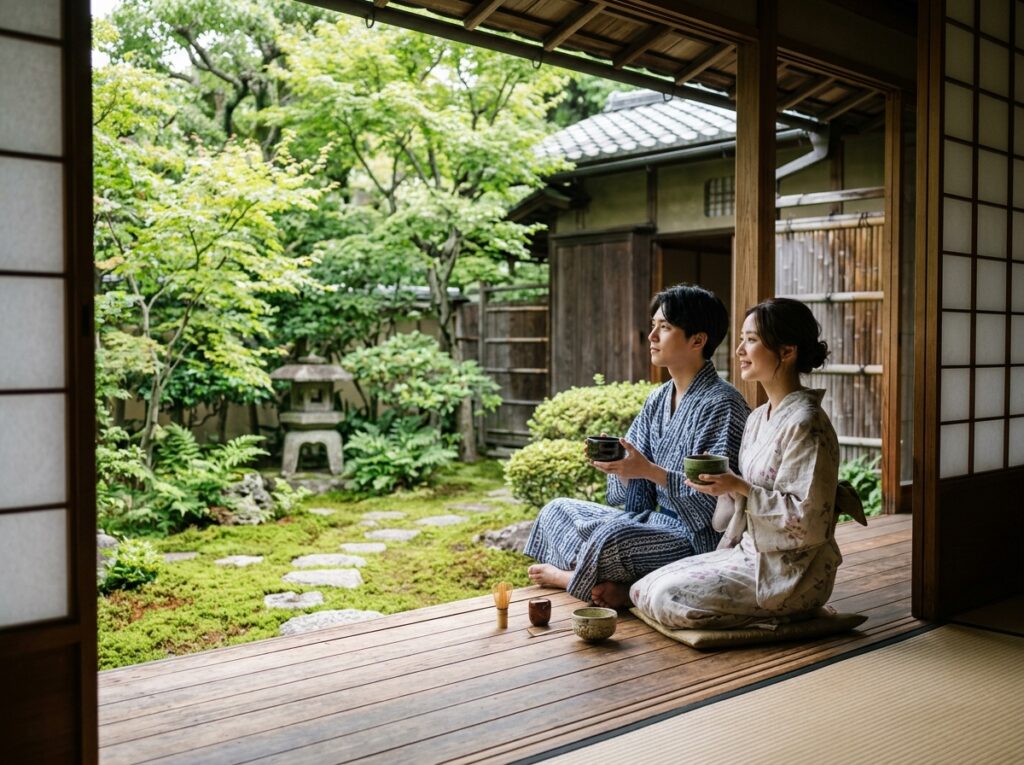
Central to the Kyoto experience is the timeless ritual of Chado—the Way of Tea. Visiting a quiet machiya tea house tucked into a cobblestone alley in Gion or Kamigamo, you are invited to remove your shoes, step onto fragrant tatami straw mats, and observe the tea master’s precise, fluid choreography. Every movement—from warming the hand-thrown chawan bowl to whisking powdered ceremonial matcha into a vibrant frothy green broth—is an embodiment of harmony, respect, purity, and tranquility.
Beyond the temples, Kyoto rewards the patient walker who explores on a traditional mamachari bicycle. Pedaling along the weeping willow-lined banks of the Kamo River, you can stop at centuries-old wagashi confectioneries crafting seasonal sweets shaped like autumn chestnuts, visit independent indigo dye studios, or wander through quiet pottery markets in Gojozaka. The city’s low skyline and preservation of traditional wooden timber architecture maintain an intimate human scale that fosters deep psychological calm.
An intentional journey through Kyoto reminds us of the Japanese concept of ichigo ichie—the understanding that every encounter in life is unique and can never be duplicated. Sitting quietly on the polished cedar engawa veranda of an ancient temple as twilight falls and temple bells chime across the hills, you realize that travel is not about collecting sights, but about refining your capacity to see and feel with profound presence.
Experiencing Kyoto during the peak of autumn foliage is an unforgettable study in Japanese aesthetic reverence and seasonal mindfulness. While major sightseeing landmarks like Kiyomizu-dera draw large tour groups, venturing into the northern foothills of Takao and Ohara reveals quiet Zen temple sanctuaries where golden ginkgo and crimson maple leaves carpet ancient moss gardens in complete silence. In temples such as Gio-ji and Koto-in, wooden verandas open directly onto tranquil raked gravel courtyards where the slow flutter of a single falling leaf becomes a mesmerizing focus for meditation.
To truly absorb Kyoto’s seasonal magic, consider staying in a lovingly restored traditional machiya townhouse in the quiet residential alleys of Nishijin. Walking across fragrant tatami straw mats in soft cotton slippers, listening to the gentle murmur of a hidden courtyard stone water basin, and watching morning mist rise off the Higashiyama hills cultivates a profound interior calm. Savoring seasonal wagashi sweets shaped like delicate maple leaves paired with whisked bitter matcha reminds us of the Buddhist concept of mujo—the sweet, bittersweet beauty of impermanence that makes every fleeting autumn moment infinitely precious.
Autumn in Kyoto offers a profound masterclass in transience and seasonal reverence. As the golden maple leaves drift gently onto moss-covered temple gardens, we are reminded to slow our footsteps, breathe in the crisp mountain air, and cherish each fleeting encounter as an unrepeatable gift of nature.
In the timeless silence of Kyoto’s ancient temples, we learn that slowing our pace is the only way to genuinely witness the fragile, exquisite beauty of the world around us.
“In the stillness of a Kyoto moss garden, every fallen maple leaf feels like an intentional brushstroke of nature.”

When we approach our everyday choices with patience and discernment, we cultivate a lifestyle that feels deeply personal, enduring, and harmonious.