The modern workday is structured around continuous linear momentum: back-to-back notifications, endless tabs, and the perpetual illusion of urgency. Yet our human nervous systems evolved around rhythmic cycles of intense focus punctuated by deep, grounding stillness. The afternoon pause is a deliberate ritual designed to reclaim this natural biological rhythm.
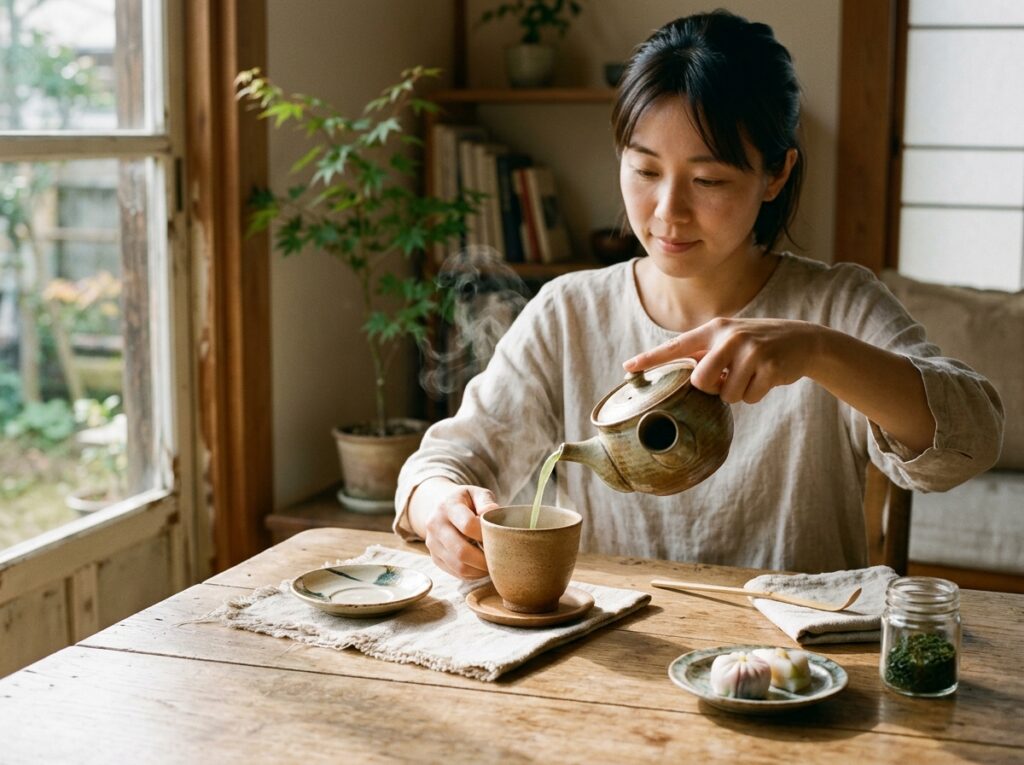
At three in the afternoon, when mental fatigue begins to cloud discernment, resist the reflexive urge to reach for a second sugary espresso. Instead, step completely away from digital devices. Boil fresh spring water in a cast-iron kettle, measure three grams of whole-leaf spring sencha into a handcrafted ceramic kyusu teapot, and watch the tender leaves unfurl in steaming water.
The sensorial engagement required by tea preparation anchors wandering attention back into the present moment. The warmth of the ceramic cup cradled between both palms, the pale jade hue of the liquor, and the earthy umami aroma awaken sensory receptors that remain dormant during hours of computer work.
Allowing your mind to drift freely for thirty uninterrupted minutes creates space for subconscious synthesis. When we stop demanding immediate output from our minds, our brains connect disparate threads of thought into unexpected creative breakthroughs. Return to your desk not exhausted, but centered, refreshed, and quietly inspired.
“A pause is not lost productivity; it is the quiet reservoir from which genuine inspiration springs.”

When we approach our everyday choices with patience and discernment, we cultivate a lifestyle that feels deeply personal, enduring, and harmonious.